

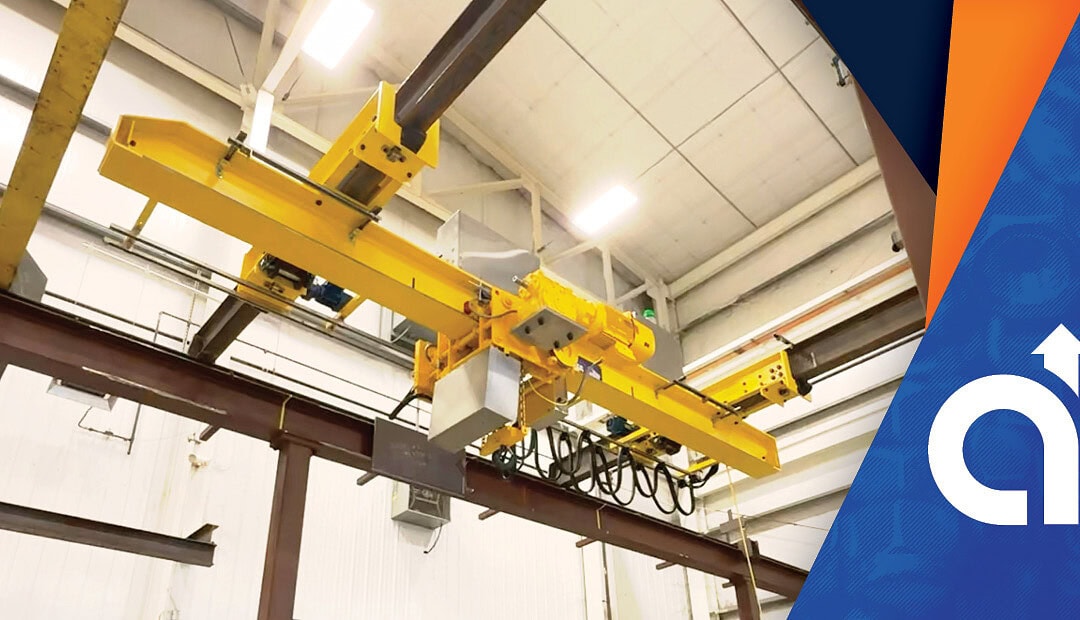
The difference lies in what happens when something goes wrong. In a typical plant, when an overhead crane goes down it means a bad afternoon that ends in a call to maintenance and a shifted production schedule. In a defense or government facility, that same failure can ripple into missed test windows, delayed deployments, or a program review nobody was hoping for.
Whether supporting naval shipyards, aerospace manufacturing, military vehicle maintenance, or government research facilities, mission-critical cranes are often part of operations where precision, reliability, and uptime directly affect program schedules.
So what separates a mission-critical crane from a very good industrial one? A few things, and none of them are accidental.
Reliability Is the Point
In commercial settings, reliability is one of several priorities, weighed against cost and speed to install. On a defense program, it moves to the top of the list and stays there.
Government projects tend to run on schedules with almost no slack. Multiple teams, specialized equipment, and secure processes are all timed to depend on each other. When a crane fails in that environment, the damage isn’t contained to the lift but extends to the mission.
That’s why these cranes are engineered for reliability from the first design review and not treated as an afterthought.
Redundancy Is the Insurance Policy
Ask an engineer what makes a crane mission-critical and redundancy comes up fast. The idea is simple: don’t let one component’s failure become the whole system’s failure.
Depending on the application, that might mean:
- Redundant brakes
- Dual-drive configurations
- Backup power or control systems
- Multiple load-monitoring devices
- Independent safety circuits
If one system falters, another is already positioned to hold the load or finish the operation safely. It’s not about eliminating the possibility of a problem because that’s not realistic. It’s about making sure a single problem never becomes a shutdown.
Why a Mission Critical Crane Is Built for the Job, Not the Catalog
Applying the same level of redundancy to every application isn’t always the right answer.
A crane handling routine maintenance parts doesn’t need to be engineered like one supporting missile assembly, satellite integration, or classified testing. So the process starts with a hard look at the actual application.
Engineers ask different questions. What happens if this crane goes down? What are the load characteristics? What environmental conditions will it face? What safety margins does the mission require? Which military, government, and industry standards apply?
The answers shape the design. There’s no default configuration, only the one that fits the actual risk.
Reliability Doesn’t Expire at Installation
A crane that’s mission-critical on day one needs to still be mission-critical fifteen years later. That means designing for the long haul: preventive maintenance built in from the start, components that are actually accessible for service, and a lifecycle plan that involves decades of operation.
As facility needs change, these systems are built to evolve with them. That means new controls, updated monitoring technology, ands replacement components all without tearing out the whole crane and starting over. For agencies trying to stretch capital budgets while keeping readiness high, that flexibility matters as much as the initial engineering.
The Real Definition of a Mission Critical Crane
Mission-critical doesn’t mean biggest. It doesn’t mean highest capacity. It means dependable performance when the consequences of failure are high. Getting there takes deliberate engineering, components with a track record, redundancy where it actually matters, and a real understanding of the environment the crane will operate in, not assumptions borrowed from a different industry.
At American Crane & Equipment Corporation, this is the standard we design to. We engineer overhead crane systems for facilities where reliability, safety, and performance aren’t nice-to-haves. They’re the job.
TL;DR: Mission-critical cranes aren’t defined by their size or capacity. They’re defined by the consequences of failure. For defense and government facilities, that means engineering for reliability, redundancy, and long-term performance where there’s little margin for error.