
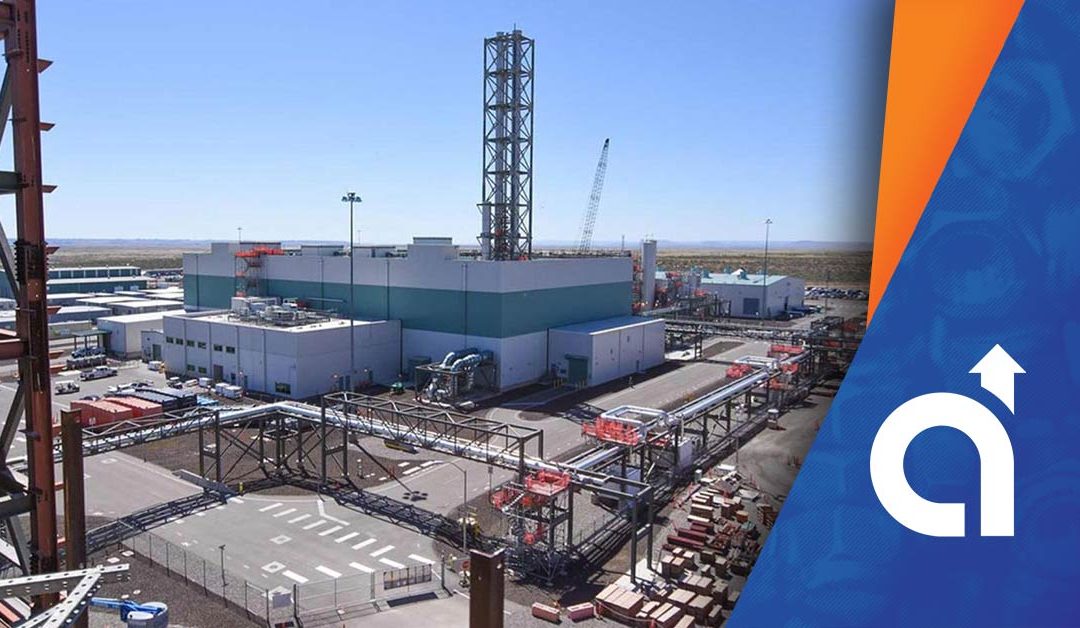
Hanford vitrification entered a historic new chapter in October 2025, when the Waste Treatment and Immobilization Plant, known as the Vit Plant, began turning radioactive tank waste into glass and met its October 15 Consent Decree commitment. The Washington site, once a center of plutonium production for the Manhattan Project and Cold War, holds approximately 56 million gallons of radioactive and chemical waste in 177 underground tanks.
For DOE program offices and Office of Environmental Management contractors, this achievement brings the next challenge into focus: sustaining safe, reliable treatment over decades. Lifting equipment partners have a role in supporting that continuity.
How Hanford Vitrification Turns Legacy Waste Into Stable Glass
Inside the Low-Activity Waste Facility, two 300-ton melters combine waste with glass-forming materials at approximately 2,100°F. The resulting glass is poured into stainless steel containers and sent to Hanford’s Integrated Disposal Facility for long-term disposal. By May 26, 2026, crews had immobilized more than 100,000 gallons of tank waste. Hot commissioning continues as teams establish consistent production and sustained operations.
The scale reflects the difficulty of the mission. More than $30 billion had been spent on the treatment plants by fall 2025, following decades of development and construction.
The High-Level Waste Facility represents another major step ahead, with vitrification expected to begin in 2033. That future work makes long-term equipment planning essential today.
American Crane’s Connection to Hanford
At American Crane & Equipment Corporation, our connection to this mission includes equipment used to manage Manhattan-era waste at Hanford. That work forms part of our experience supplying Single Failure Proof and Special Purpose Service Cranes to DOE and the commercial nuclear industry.
This history gives practical meaning to the Hanford vitrification milestone. Equipment decisions made for cleanup must account for demanding operating environments, restricted access, and service needs that can extend across generations of personnel.
What Should a Lifting Equipment Partner Bring?
For DOE and its contractors, we recommend evaluating prospective partners around four questions:
- Can the equipment support remote handling? Discuss positioning, visibility, controls, and recovery procedures where direct operator access is limited.
- How will the design address the application’s hazards? Establish radiological conditions, seismic requirements, and any need for single failure proof features early.
- Will it fit the existing facility? Review clearances, structural interfaces, load paths, and installation access before finalizing the design.
- How will it remain serviceable? Ask for a clear approach to inspection, maintenance access, replacement parts, documentation, and future modernization.
These conversations should begin before procurement specifications are fixed. They help connect lifting capacity to the actual work: handling loads safely, supporting maintenance, and keeping critical operations moving.
Gathering Requirements Before the RFP
Whether your project supports Hanford vitrification directly or another long-duration cleanup effort, a short requirements package makes these conversations more productive. Before you reach out to a lifting equipment partner, gather the rated load and duty cycle, the operating environment, access limits for inspection and repair, applicable quality and regulatory expectations, and the expected service life. The more clearly these are defined up front, the easier it is to compare designs honestly and avoid costly changes after fabrication begins.
Documenting those items early also helps your team confirm that the equipment, the facility design, and the maintenance plan all rest on the same operating assumptions.
What Comes Next for Hanford?
The start of Hanford vitrification marks measurable progress in a mission that began more than eight decades ago. Supporting its next chapter calls for lifting partners who understand both the immediate application and the years of work ahead.
American Crane & Equipment Corporation’s engineering team can review your requirements and talk through options. Contact us to start the conversation.
Start your equipment planning with How to Choose the Right Crane: A Crane Buyer’s Guide.