

Hoist accessories are what turn a properly sized hoist into a complete, working lifting system.
You’ve selected a hoist with the right capacity, so the next question is what makes it ready for your facility. The hoist provides the lift, but its supporting components determine how it travels, receives power, and responds to the operator.
Trolleys and Beam Clamps
Need to move a load along a beam? A trolley supports the hoist and provides horizontal travel. Depending on the application, trolleys may be manually pushed, hand-geared, or motor-driven.
For a portable setup or non-permanent installation that needs a fixed lifting point, a suitable beam clamp can provide a removable hoist attachment. A standard beam clamp does not provide trolley travel. Match either option to the beam dimensions, rated load, and manufacturer’s requirements.
Electrification
An electric hoist needs a reliable power supply, including when it moves. Three categories help address that challenge:
- Cable: The basic power feed. Cable must suit the electrical load, operating environment, and any required flexing. Moving applications also need appropriate support and management.
- Conductor bar systems: Moving collectors maintain electrical contact with bars installed along the travel path. Product families include Duct-O-Bar Figure Eight, Duct-O-Wire Heated Figure 8, Duct-O-Wire Side Contact, Conductix Saf-T Bar, Safe-Lec2, and 8 Bar. Selection depends on electrical requirements, installation geometry, and environmental conditions; these systems are not interchangeable.
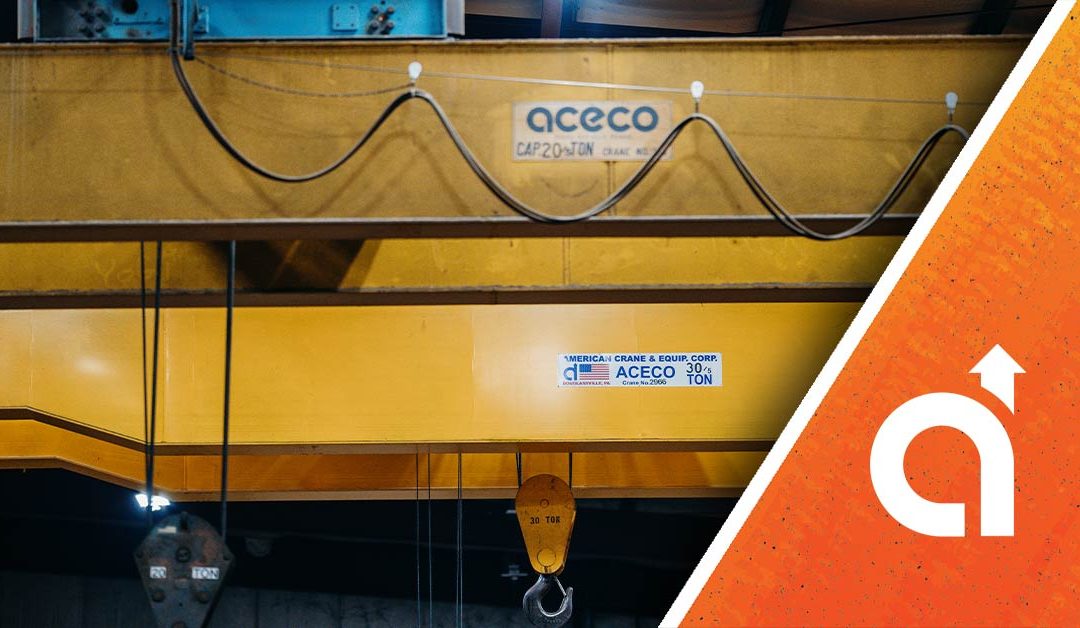
- Festoon systems: An alternative to conductor bar for appropriate applications, festoons carry flexible cables on traveling supports. The cable loops extend and gather as the equipment moves.
American Crane’s Duct-O-Wire product overview provides more information on conductor bars and festoon systems.
Hoist and Trolley Parts
Already have a working installation? Replacement parts help keep it running. This category covers components such as brakes, trolley wheels, bearings, gearing, and electrical parts, rather than complete accessory assemblies purchased to equip a new system.
The genuine-parts message matters here: a component that looks right is not necessarily the correct replacement. Confirm the equipment model, serial number, and specified part through a trusted supplier. Genuine, correctly matched parts support confidence in fit, performance, and traceability.
Pendant/PB Stations and Radio Controls
Pendant push-button (PB) stations give operators a wired connection to the equipment. They can make sense when the operator’s working position and travel path accommodate the pendant cable.
Wireless radio controls offer greater freedom to choose an operating position with a clear view of the load. They can be useful when a pendant would restrict movement. Consider visibility, operating procedures, battery management, and compatibility when choosing between them.
VFD-Motor Controls
A variable frequency drive (VFD) is an upgrade option for applications that benefit from adjustable speed and smoother acceleration and deceleration. It is not a base requirement for every hoist.
Columbus McKinnon explains how VFD control compares with two-speed control. Any retrofit should be evaluated for motor, brake, and control-system compatibility.
Choosing the Right Hoist Accessories for Your Application
The right hoist accessories depend on how the equipment will be used, not just on the hoist itself. Before specifying components, review these factors with your supplier:
- Beam size and flange width: Trolleys and beam clamps must match the beam profile they mount to.
- Travel distance and speed: Longer runs and frequent movement influence trolley type and electrification method.
- Operating environment: Dust, heat, moisture, and outdoor exposure all affect component selection.
- Duty cycle: How often and how hard the hoist works shapes the right controls and replacement-part plan.
- Operator position: Visibility and travel path help determine whether a pendant or radio control fits better.
Matching hoist accessories to these conditions from the start helps avoid retrofits, downtime, and compatibility problems later.
Need help putting the pieces together? Contact American Crane and Equipment Corporation to identify accessories and replacement parts suited to your equipment and application.