

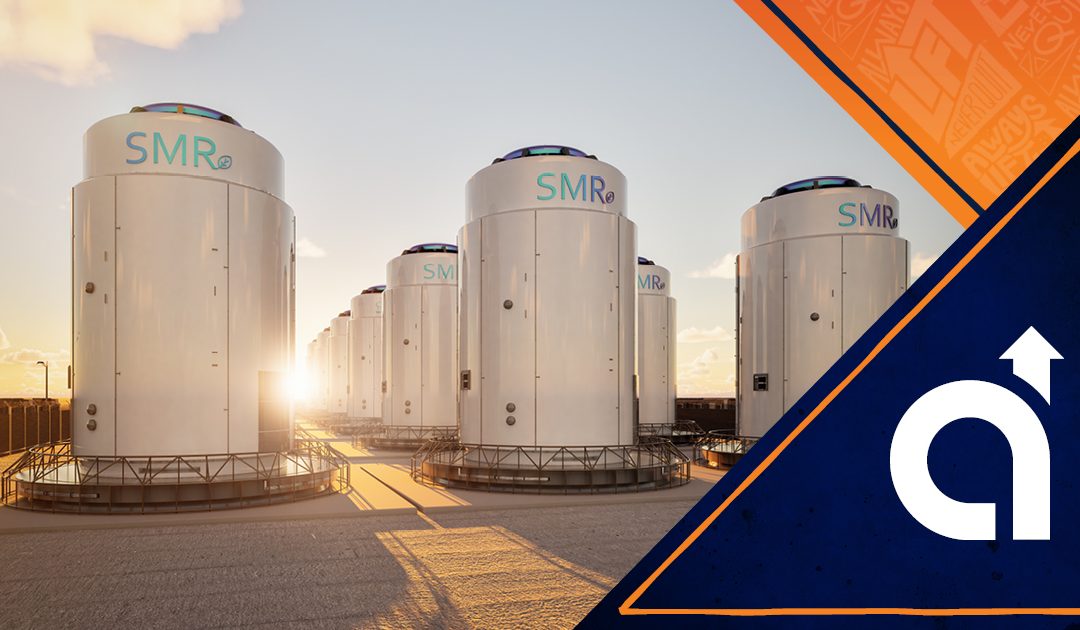
SMR crane systems are becoming a critical and often overlooked part of small modular reactor facility design. As SMR projects move from concept to construction, custom crane systems and advanced material handling solutions are becoming an important part of facility design.
TL;DR
Small modular reactors may occupy a smaller footprint than traditional nuclear plants, but they still require highly specialized material handling systems. As SMR designs evolve, crane systems will support construction, maintenance, remote operations, and long-term facility reliability.
Small modular reactors (SMRs) are generating plenty of discussion about energy production, construction timelines, and the future of nuclear power.
Far less attention is being paid to what happens once the components arrive on-site.
Reactor vessels, shielding systems, heat exchangers, and other large assemblies still need to be transported, positioned, maintained, inspected, and, eventually, replaced. None of that happens without carefully designed material handling systems.
As SMR projects move from planning to deployment, crane systems are becoming an increasingly important piece of the infrastructure that makes these facilities possible.
What Changes When Reactor Design Changes
The promise of SMRs is straightforward: standardized designs, factory-built components, smaller footprints, and more flexible deployment options than conventional nuclear facilities.
That does not necessarily make lifting and material handling simpler.
Many SMR designs rely on modular construction methods, where large assemblies are fabricated off-site and transported for final installation. Those modules must be positioned accurately, often within tight tolerances and space-constrained environments.
Once operational, facilities still require systems capable of handling heavy components during maintenance activities, inspections, upgrades, and eventual decommissioning. Stanford University — Understand Small Modular Reactors
Smaller reactors do not necessarily mean simpler material handling. In many cases, they create a different set of engineering and operational considerations that must be addressed throughout the facility’s lifecycle.
Remote Operations Are Becoming More Important
One of the most interesting intersections between SMR development and crane technology involves remote operation.
Nuclear facilities have long benefited from remote-controlled and robotic crane systems that reduce personnel exposure in safety-sensitive environments. As reactor designs continue to evolve, many operators are evaluating ways to incorporate greater automation, monitoring, and remote handling capabilities into facility operations.
This creates opportunities for crane systems that do more than lift.
Advanced control systems, integrated monitoring, automated positioning, and remote operation capabilities can help support both operational efficiency and worker safety while maintaining the reliability expected within nuclear applications. NRC Official Regulatory Guide — Overhead Crane Handling
Why SMR Crane Systems Require Custom Engineering
While SMRs are often promoted as standardized reactor designs, no two project sites are exactly alike. ITIF — SMRs: A Realist Approach
Facility layouts, maintenance strategies, shielding requirements, access limitations, and regulatory considerations can all influence material handling needs.
That reality places a premium on custom-engineered crane systems designed around the specific demands of each facility.
For crane manufacturers serving the nuclear market, the challenge is not simply building equipment that lifts a load. It is designing systems that integrate seamlessly into highly regulated environments while supporting long-term operational requirements that may span decades.
Preparing for the Next Phase of Nuclear Growth
The SMR market remains an emerging segment, but momentum continues to build as utilities, governments, and private developers explore new nuclear generation options.
As SMR technology continues to mature, material handling considerations will likely be evaluated earlier in the design process. Decisions surrounding crane systems, remote operation capabilities, maintenance access, and long-term serviceability can influence how efficiently a facility is built, operated, and maintained for decades to come.
For organizations planning SMR facilities, crane systems should be considered early in the process—not as an afterthought, but as a foundational component that supports construction, maintenance, operational efficiency, and long-term reliability.
At American Crane & Equipment Corporation, we understand the unique demands of nuclear applications and develop custom lifting solutions designed for complex operating environments. As the SMR market continues to evolve, our team is ready to help organizations evaluate material handling requirements and design crane systems that support the future of nuclear energy.