

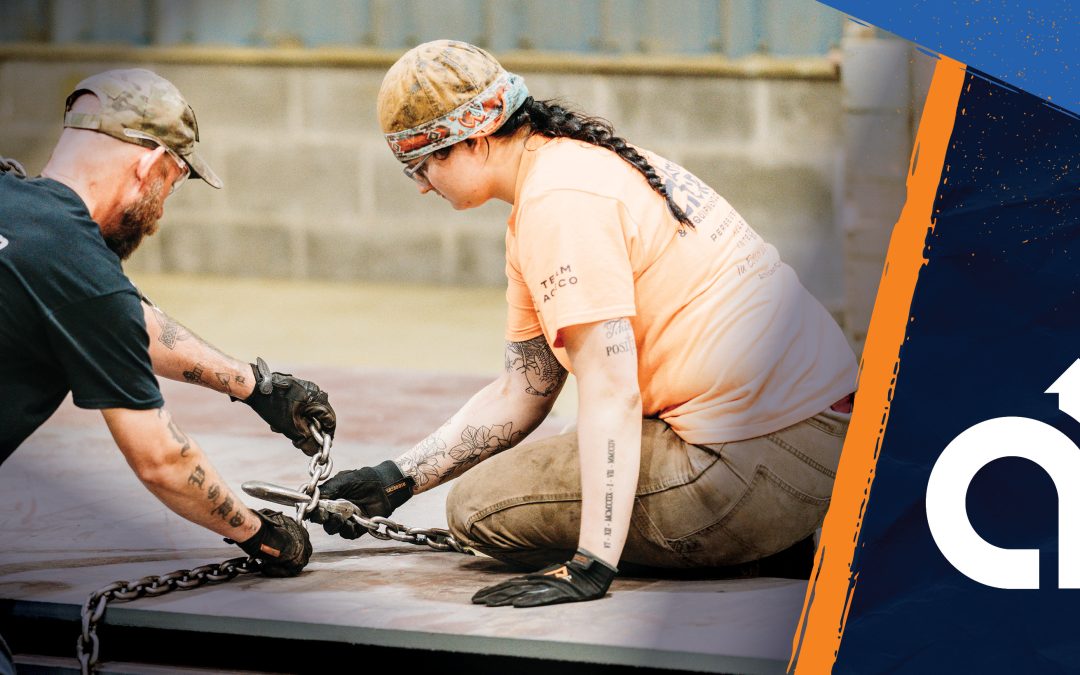
Today, manufacturing employs over 12 million Americans, and by 2033 the industry is projected to need 3.8 million additional skilled workers to keep up with demand. Despite this urgent need for talent, women still make up just 30% of the manufacturing workforce and hold only about one in four leadership roles. Closing that gap isn’t just the right thing to do — it’s essential to building the workforce of the future.
Building Pathways for Women
Across the country, national and regional organizations are working to close the workforce gap. Programs such as The Manufacturing Institute’s Women MAKE America Initiative and local workforce development efforts like Women in Skilled Trades encourage women to explore careers in the trades and STEM fields.
Among these efforts, the Women in Manufacturing Association (WiM) stands out as a leading voice. Founded in 2011, WiM has built a powerful network of chapters, summits, and mentorship opportunities, creating visibility and leadership pathways for women across the sector. Over the past 15 years, WiM has helped make inclusion a business priority, encouraging manufacturers to actively recruit, retain, and promote women into technical and leadership roles.
What’s Still Holding Us Back?
Despite progress, numerous obstacles remain. Women are underrepresented in certain trades, engineering disciplines, and executive leadership roles. Implicit bias and similarity bias can hamper advancement. Family caregiving responsibilities, pay equity gaps, and lack of sponsorship or mentorship still present real headwinds. Breaking barriers isn’t just about recruiting women — it’s about retaining, promoting, and empowering them across career arcs.
When organizations intentionally cultivate inclusion, the benefits are measurable: diverse teams foster better problem-solving, innovation, employee engagement, and stronger performance. Many studies and industry practitioners point to the fact that gender diversity correlates with improved operations, safety, and profitability.
In manufacturing, where process improvements, lean thinking, and digital transformation are front and center, having varied perspectives is essential. Women bring unique insights in areas such as workforce planning, human-centric process design, safety practice, and team leadership.
Building the Future
The future of manufacturing will be defined by advanced automation, additive manufacturing, AI, data-driven systems, and sustainable operations. To thrive, the industry must tap the full breadth of available talent — individuals who can think broadly, adapt fluidly, lead boldly, and bridge technological and human domains. Excluding half the talent pool simply isn’t an option; women must be fully represented, not as the exception but as the norm.
Key strategies to build that future include:
- Strengthening pathways: This involves early engagement such as STEM outreach in schools, apprenticeship programs, and inclusive hiring in trades and engineering.
- Sponsorship and mentorship: This means pairing emerging women leaders with seasoned mentors and champions.
- Culture shifts: This includes training around inclusive leadership, bias mitigation, and inclusive workplace policies.
- Accountability and metrics: This requires measuring representation, retention, promotion, pay equity, and employee sentiment.
- Visible role models: This focuses on sharing women’s success stories, leadership journeys, and influence in manufacturing to inspire the next generation.
Walking the Talk at American Crane
At American Crane, progress isn’t theoretical — it’s part of the company’s identity. American Crane is a certified Women’s Business Enterprise and Women-Owned Small Business affirming that it is at least 51% owned, operated, and controlled by women. This distinction not only reinforces the company’s commitment to diversity and authenticity but also opens doors for partnerships and projects that value supplier diversity.
Karen Norheim, American Crane’s president and CEO, is deeply engaged in advancing women in manufacturing. She served as Chair on the WiM Board of Directors in 2019 and continues to support WiM initiatives, including hosting a local chapter event at American Crane’s headquarters. This kind of local engagement both elevates the community and brings real-world learning back into the company.
By integrating these commitments — certification, leadership, internal culture, and external engagement — American Crane doesn’t just talk about inclusion; it reflects it in structure and action. As the industry evolves, companies like American Crane are helping to drive the change, proving that building a strong, inclusive future isn’t just possible — it’s smart business.
If you’re inspired to shape the next era of manufacturing — to build, lead, and innovate alongside a team that values your voice — American Crane is the place for you. Join us in lifting the industry to new heights.