

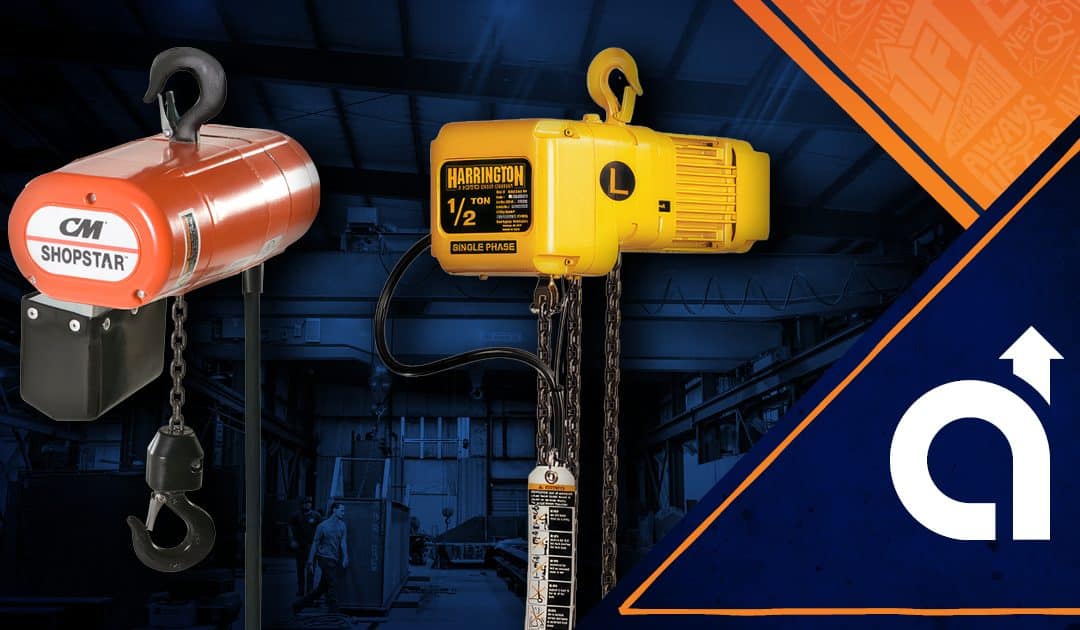
Choosing the right electric chain hoist isn’t just about capacity — it starts with understanding the power available in your facility. One of the most common questions during hoist selection is whether single-phase or three-phase power is the better fit. While both options play an important role in material handling, each is designed to perform best under different operating conditions.
Understanding how these power configurations differ can help ensure your lifting equipment is properly matched to your application from day one.
Single-Phase Electric Chain Hoists
Single-phase electric chain hoists typically operate on 110–120V or 208–240V power, making them a practical solution for facilities without access to three-phase electrical service. They are commonly used in maintenance areas, smaller shops, warehouses, and other environments where standard electrical infrastructure is already in place.
Because single-phase power is widely available, installation is often simpler and does not require costly electrical upgrades. This makes single-phase hoists an efficient option for light to moderate lifting applications, particularly where lifts are performed intermittently rather than continuously.
That said, single-phase hoists generally have lower duty cycle ratings compared to three-phase models. They may not be ideal for applications involving frequent starts and stops, higher lifting speeds, or extended operating periods. Understanding how often the hoist will be used — and under what conditions — is key when evaluating whether single-phase power is the right choice.
Three-Phase Electric Chain Hoists
Three-phase electric chain hoists typically operate on 208V, 230V, 460V, or higher voltages and are commonly found in industrial facilities with dedicated power infrastructure. These hoists are built to handle higher duty cycles, heavier loads, and more demanding operating environments.
The advantages of three-phase power include smoother motor operation, greater efficiency, and reduced heat buildup during extended use. These characteristics make three-phase hoists well suited for production lines, manufacturing facilities, and applications where lifting equipment is used consistently throughout the day.
Although three-phase hoists may require a higher initial investment due to electrical requirements, they often deliver greater long-term value through improved reliability, consistent performance, and extended service life in high-use applications.
Key Factors to Consider When Choosing a Power Option
When comparing single-phase and three-phase electric chain hoists, it’s important to evaluate:
- Available power within the facility
- Frequency of use and required duty cycle
- Load capacity and lift speed needs
- Long-term operating expectations
Aligning the hoist’s power configuration with the application helps reduce unnecessary wear, improve safety, and support dependable operation over time.
Facilities operating without three-phase electrical service may benefit from a closer look at how modern single-phase electric chain hoists are being applied in industrial environments. Note for Lauren — we could link this sentence back to our blog post on the SNER once it’s posted?
Making the Right Selection
There is no one-size-fits-all answer when choosing between single-phase and three-phase electric chain hoists. The best solution depends on how the equipment will be used, the demands placed on it, and the electrical infrastructure available on site.
At American Crane and Equipment Corporation, we work closely with customers to evaluate these factors and ensure lifting equipment is properly specified for the application. Selecting the right power configuration supports safe operation, reliable performance, and long-term value across a wide range of material handling environments.