

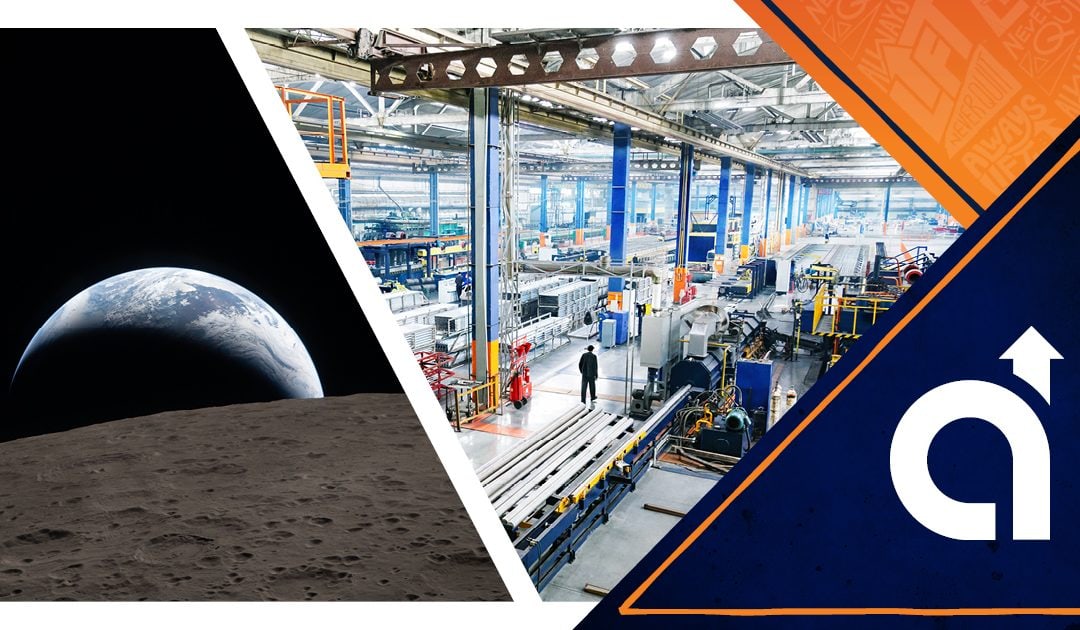
When Artemis II launched, most eyes were on the astronauts and the mission itself. But what made a program like this possible runs far deeper—through factories, engineering teams, and supply chains that stretched across nearly the entire United States. This mission wasn’t built in one place. It was coordinated across a nationwide network of suppliers.
Artemis II represents one of the most complex production efforts in modern history, powered by more than 2,700 suppliers across 47 states, from major aerospace manufacturers to highly specialized shops producing critical components. The scale alone was impressive, but what stood out more was the level of coordination required to bring it all together. Every part, system, and subsystem had to align—not just in design, but in timing, quality, and performance.
This level of complexity is becoming more common across the industry.
At the center of Artemis II was a connected approach often referred to as a “digital thread,” where design, engineering, production, and testing were all linked. Changes made in one phase were visible across the entire lifecycle, allowing teams to track components, resolve issues quickly, and maintain tight control over quality. It’s a model more manufacturers are moving toward as projects become increasingly interconnected and less forgiving of error.
The Orion spacecraft alone required advanced materials like aluminum-lithium alloys engineered for strength, weight reduction, and durability under extreme conditions. These aren’t off-the-shelf components—they’re the result of decades of material science, precision fabrication, and rigorous testing. Every piece had to perform flawlessly, not in a controlled environment, but in deep space.
This demand for performance is pushing U.S. manufacturing forward in a few key ways.
Precision and traceability are accelerating. When thousands of suppliers contribute to a single system, tolerances tighten and documentation becomes just as important as the product itself.
Integrated supply chains are becoming essential. Artemis II wasn’t just a production challenge—it was a logistics challenge. Coordinating timelines, quality standards, and delivery across hundreds of partners required a level of visibility many industries are still working to achieve.
Specialized expertise is proving just as valuable as scale. From propulsion systems to life-support equipment, many of the companies involved weren’t large-scale producers—they were niche experts delivering highly engineered solutions. Strength in this environment comes from capability as much as capacity.
For companies working in lifting and material handling, these same pressures are already familiar. Large-scale or high-stakes projects demand more than reliable equipment—they require systems engineered with the full lifecycle in mind, from installation through long-term operation. Understanding how equipment performs in real-world conditions, and how it integrates into broader processes, is what separates a standard solution from one that truly supports the work being done.
Artemis II is a milestone for space exploration, but it’s also a signal to the broader industrial landscape. The future belongs to organizations that can operate across complex supply networks, maintain visibility from concept through commissioning, and deliver consistent performance under pressure.
The mission itself lasted days, but the work behind it spanned years of planning, engineering, and execution. That’s where the real impact lies—not just in reaching space, but in advancing how things are built here on the ground.