

Manufacturing has long been associated with grit, precision, and ingenuity. Across generations, the industry has depended on the skill and dedication of the people who design, fabricate, and build the equipment that keeps it moving. Women have been an important part of that workforce—from the massive industrial mobilization of World War II to today’s advanced engineering and fabrication environments.
One of the most recognizable chapters in this story began during World War II, when millions of women entered factories to support wartime production. As men deployed overseas, women stepped into roles building aircraft, vehicles, machinery, and industrial equipment. The iconic image of “Rosie the Riveter” became a cultural symbol, but the reality behind it was even more impressive. Women were welding ship hulls, machining precision components, assembling engines, and operating heavy industrial equipment across American factories and shipyards at unprecedented wartime scale.
These workers proved something the industry had long underestimated: technical skill and mechanical aptitude were not limited by gender. Women quickly mastered complex tools, precision measurement, fabrication techniques, and production processes—demonstrating the same capabilities required to succeed in demanding industrial environments. Wartime manufacturing output surged, and much of that success rested on the capability and determination of workers across the industrial workforce.
After the war, many women were pushed out of factory jobs as returning soldiers reclaimed positions. Yet the impact of their contributions did not disappear. The experience helped shift perceptions about who could work in manufacturing, and over time, women continued to return to the field in growing numbers.
Fast forward to today, and the manufacturing landscape looks dramatically different from the factory floors of the 1940s. Modern manufacturing relies on advanced technologies such as CNC machining, automated production systems, robotics, precision fabrication, and sophisticated engineering design. These environments depend on highly skilled teams working together to solve complex problems and deliver reliable results.
At the same time, the industry faces a significant workforce challenge. Manufacturers across the United States are experiencing a growing skills gap, with thousands of open positions for machinists, welders, engineers, technicians, and skilled trades professionals. As experienced workers retire and new technologies reshape production, the need for skilled talent continues to grow.
Meeting that challenge requires looking beyond outdated assumptions about who belongs in manufacturing. For decades, factory work was often perceived as dirty, physically demanding, and unsuitable for women. In reality, modern manufacturing environments are highly technical, precision-driven workplaces that rely on knowledge, training, and problem-solving ability.
Women are not only participating in these environments—they are leading innovation within them.
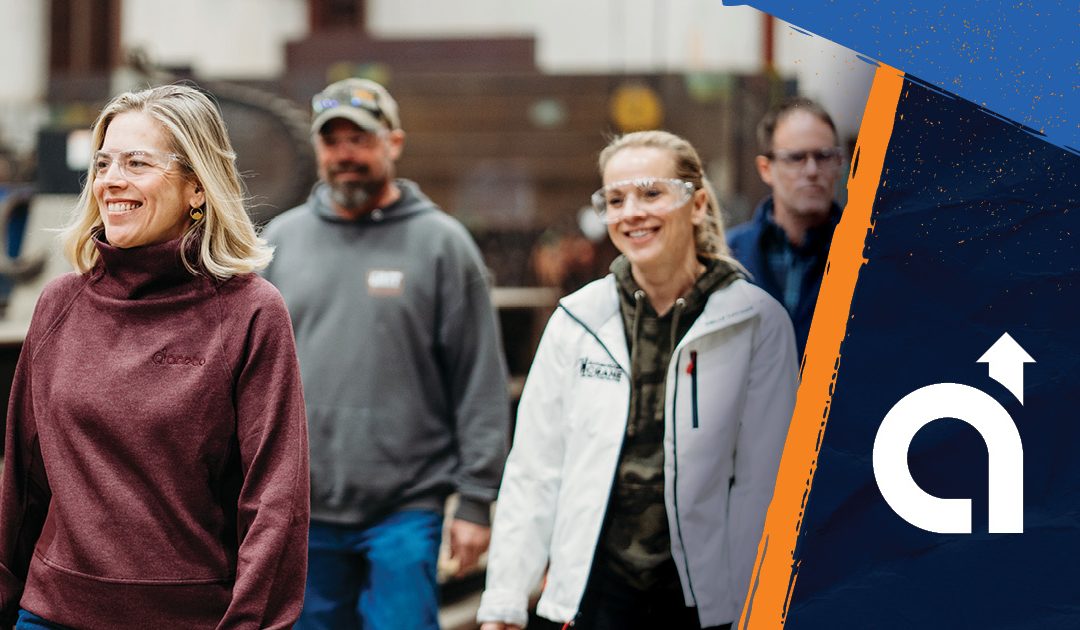
That legacy is reflected at American Crane & Equipment Corporation. As a women-owned manufacturer of custom overhead cranes and material handling systems, American Crane continues to build on generations of manufacturing expertise, with women contributing across leadership, engineering, and operations alongside the skilled teams that design, build, and support its equipment.
American Crane’s leadership is also recognized through national certification as both a Women’s Business Enterprise (WBE) and a Women-Owned Small Business (WOSB). These certifications confirm that the company is at least 51 percent owned, controlled, and managed by women, recognizing the role women play in guiding the organization’s strategy and long-term growth.
From wartime factories to modern engineering teams, women have helped shape the trajectory of manufacturing in meaningful ways. Their work reflects a broader truth about the industry: manufacturing succeeds when talent, skill, and dedication are recognized wherever they are found.
As the industry works to close the manufacturing skills gap, that lesson remains as relevant as ever. The future of manufacturing will depend on attracting the next generation of skilled workers—men and women alike—who are ready to design, build, and innovate.
At American Crane & Equipment Corporation, that principle is reflected every day in the engineers, fabricators, technicians, and leaders who work together to design and build the lifting solutions that keep industries moving.