

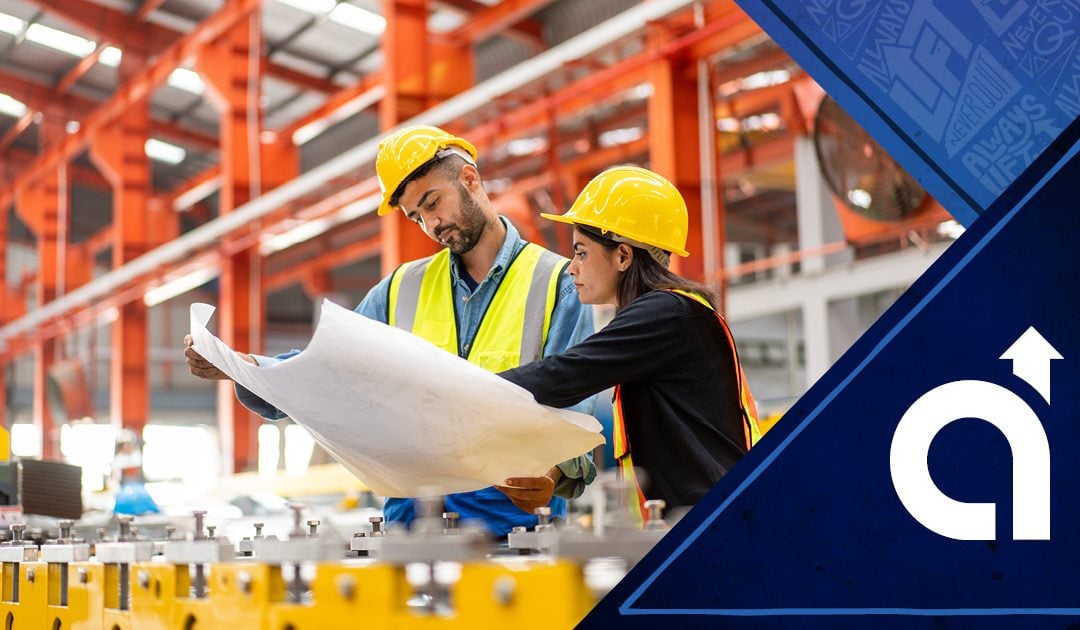
Manufacturing in 2026 is being shaped less by breakthrough moments and more by steady pressure—on labor, on output, and on systems that were never designed to carry this much load. For plant managers, the challenge isn’t identifying change. It’s deciding where to respond without overcorrecting.
Here are five shifts already reshaping how facilities operate in 2026.
1. Smarter Automation—Not Just More of It
Automation is no longer about replacing labor. It’s about making existing teams more effective. Facilities are investing in systems that reduce friction—streamlining material flow, minimizing manual handling, and improving repeatability.
The mistake is over-automating in the wrong places. The win is targeted upgrades that remove bottlenecks without creating new ones. In lifting and material handling, that often means integrating equipment that supports precision and consistency under real operating conditions—not ideal ones.
2. Workforce Gaps Are Forcing Better System Design
Labor shortages aren’t temporary. Experienced operators are harder to find, and training cycles are longer. That’s forcing a shift toward equipment and processes that are easier to operate, safer by design, and less dependent on institutional knowledge.
Plants that adapt are simplifying controls, standardizing equipment across facilities, and reducing opportunities for error. If a process only works with your best operator, it’s fragile.
3. Electrification Is Expanding Beyond Sustainability Goals
Electrification conversations used to center on sustainability targets. Now they’re operational. Facilities are evaluating electric systems for their efficiency, controllability, and reduced maintenance demands.
This shift is showing up across material handling—where cleaner operation, consistent performance, and integration with facility power systems are becoming baseline expectations. The practical question isn’t “Should we electrify?” It’s “Where does electrification improve reliability and cost control?”
4. Supply Chain Volatility Is Changing Equipment Decisions
The last few years exposed how vulnerable production can be to supply disruptions. As a result, plant managers are prioritizing equipment that is serviceable, supported, and built with components they can actually source.
Lead times, parts availability, and vendor responsiveness now carry as much weight as upfront cost. Equipment decisions are being made with lifecycle resilience in mind—not just installation timelines.
5. Throughput Pressure Is Redefining “Good Enough”
Demand isn’t slowing, but tolerance for inefficiency is shrinking. Small delays—material handling slowdowns, positioning errors, maintenance interruptions—compound quickly at scale.
That’s pushing facilities to rethink what “good enough” performance looks like. Precision, uptime, and repeatability are no longer nice-to-haves; they directly impact output and margins. Equipment that can maintain performance under continuous use becomes a competitive advantage.
Where Plans Meet Performance
The reality in 2026 is simple: most facilities aren’t struggling to identify what needs to improve. They’re struggling to implement changes that actually hold up over time.
That’s where experience matters—working with teams who understand not just how equipment is designed, but how it performs in the environments you’re running every day.
American Crane & Equipment Corporation partners with plant managers to close that gap, designing and supporting lifting systems built for long-term performance in real operating conditions. If you’re rethinking your systems, we’re ready to help.